On-Chain Risk Screeningfor DeFi Teams

Know which wallets need a closer look. Review the risk, decide how to respond and keep the evidence behind each decision.

Built for teams operating trading and lending protocols

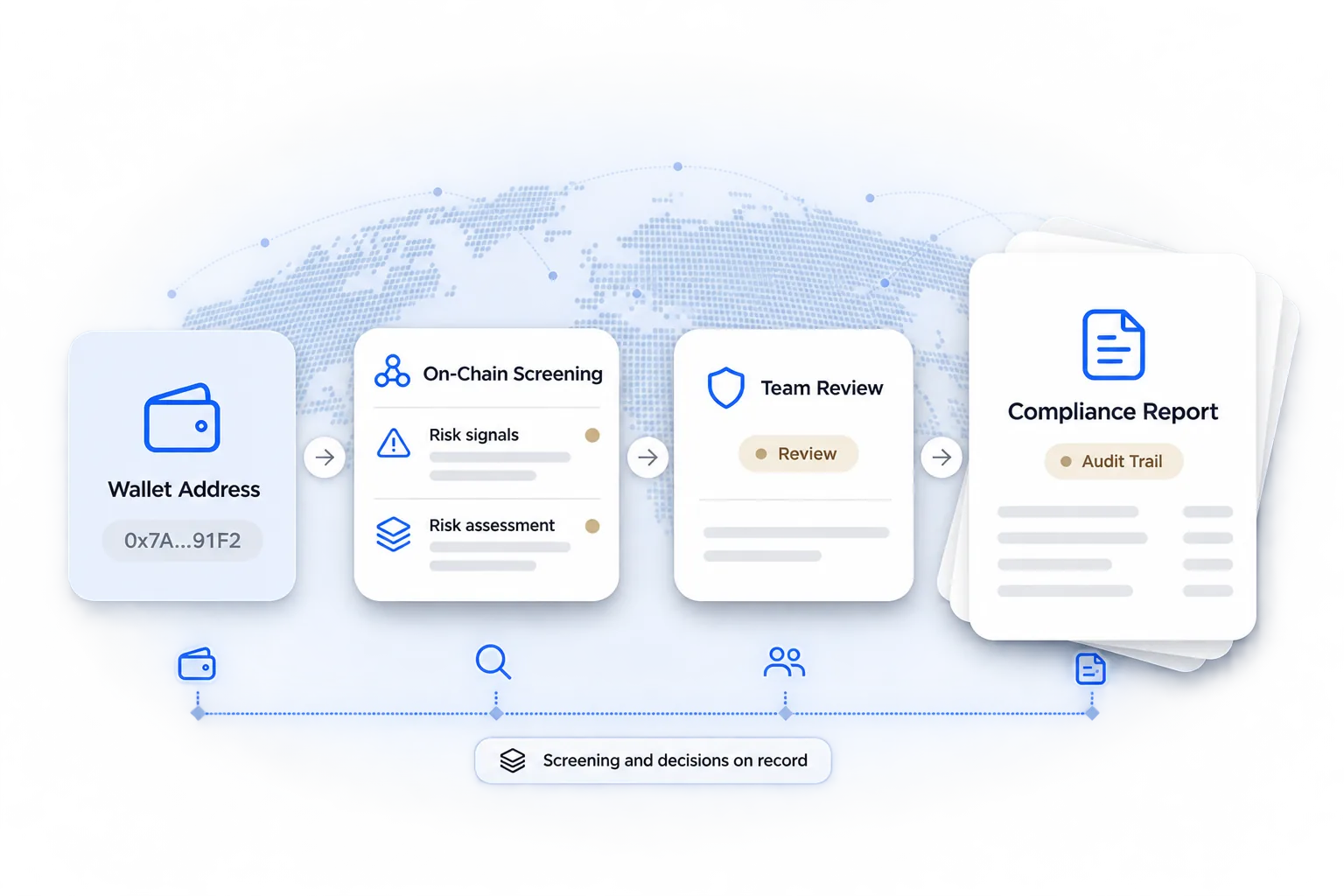
The DeFi Shield workflow: a wallet address goes through on-chain screening and team review to a compliance report with an audit trail, with screening and decisions on record

A Wallet Address is Only the Starting Point

When users connect self-custody wallets, your team may have no identity information on file. You still need to understand the on-chain risk and record how you handled it.

DeFi Shield screens addresses interacting with your protocol and opens a case when risk is detected. Your team reviews the findings and records its response, with evidence to support regulatory enquiries.

See Why a Wallet was Flagged

Review the risk level, score and triggered rules together. Inspect the rule details before confirming an action.

DeFi Shield / Screening resultProduct preview
Illustrative product view · Demo data with masked addresses

Risk Level and Score

Understand the wallet’s overall risk assessment.

Triggered Rules

See which rules recommend a block or further review.

Your Decision on Record

Confirm the action and retain the outcome in the audit trail.

Risk labels and scores use third-party on-chain intelligence covering sanctions, mixers, hacks and stolen funds.

Monitor Interactions or Check Before a Transaction

Use continuous monitoring for protocol activity. Add optional pre-transaction checks through your own application.

Screen Protocol Activity

  1. Set the Scope

    Configure contract addresses, chains and risk thresholds.

  2. Screen Interacting Wallets

    DeFi Shield continuously checks addresses that interact with those contracts.

  3. Review Alerts and Cases

    Each risk hit opens an alert and a case for your team to assess.

Screen Before a Transaction

  1. Send the Wallet Address

    Your application submits the address through an API before the transaction.

  2. Get a Recommendation

    Receive an approve, review or reject recommendation.

  3. Apply Your Decision

    Your own application decides whether to block the transaction.

Decisions Stay with Your Team DeFi Shield provides findings and recommendations. Freezing assets, suspending services and reporting to regulators remain your responsibility.

Keep the Findings and the Response on Record

Every alert and action is logged. Records are append-only: existing entries cannot be altered. Export the audit trail by date range as CSV or PDF.

Captured in the Audit Trail

  • Wallet address
  • Risk label and score
  • Outcome and handling notes
  • Timestamp

CSV / PDF · Export by date range

Wallet Reports

A single address’s risk profile and triggered rules.

Case Reports

An overview, narrative and recommended action for linked addresses.

Periodic Summaries

Automatically generated case volumes, status changes and open items.

Reports available in English, Simplified Chinese and Traditional Chinese

Drafts for Your Team to Review

AI drafts an assessment and recommended action for each alert, report narratives and suspicious transaction reporting text when needed.

Compliance staff review, approve or edit all AI output before use.

Before You Get Started

Who is DeFi Shield built for?

DeFi protocols with an operating team, primarily trading and lending protocols. It supports wallet screening, case review and compliance reporting.

Does DeFi Shield automatically block wallets?

No. It provides risk findings and recommended actions. Your team decides whether to block. With optional pre-transaction screening, the decision is applied in your own application.

Does screening change the protocol’s decentralised design?

The optional pre-transaction check runs through your own application. The protocol’s decentralised design stays intact.

Can AI submit a suspicious transaction report?

The documented capability is drafting report text. Compliance staff must review it before use. Reporting to regulators remains your team’s decision.

What evidence can we use for a regulatory enquiry?

Export the audit trail, including addresses, risk labels, scores, actions, handling notes and timestamps. Address-level, case-level and periodic reports are available for your team to review.

See How It Fits Your Protocol

Walk through wallet screening, case review and reporting with the WIDTH team.