95% fewer false positives, zero missed SARs
WIDTH scores every transaction against 12 typologies — structuring, TBML, mule networks — and pre-drafts FinCEN-format SARs within the 30-day filing window. Analysts triage signal, not a 40M-alert backlog.
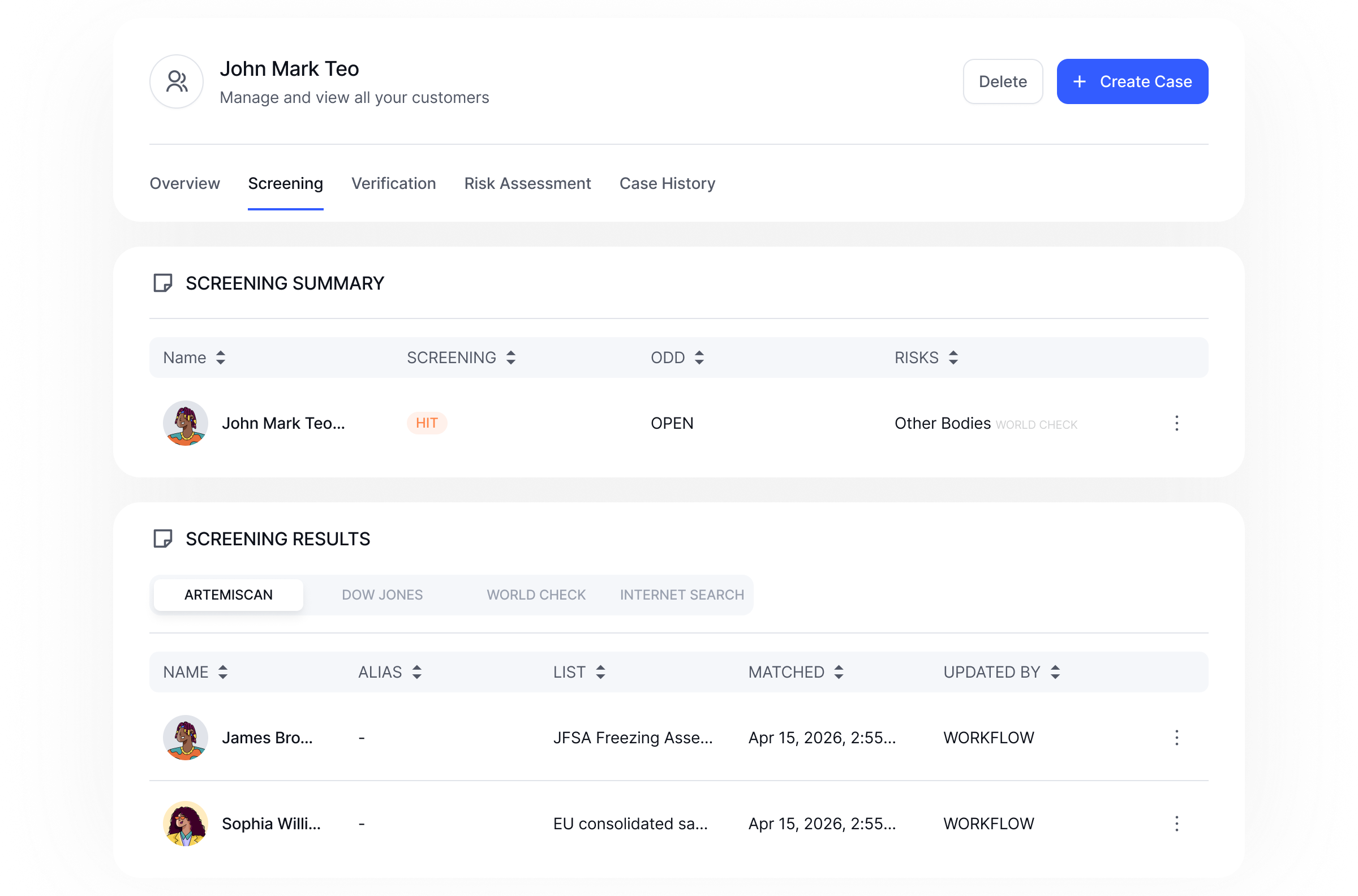
WIDTH scores every transaction against 12 typologies — structuring, TBML, mule networks — and pre-drafts FinCEN-format SARs within the 30-day filing window. Analysts triage signal, not a 40M-alert backlog.
Peer-group normalisation cuts 95% of false positives while holding recall above 98% on structuring and TBML typologies.
MAS Notice 626 §9, FCA SYSC 6.3, and AUSTRAC AML/CTF policies encoded as executable overlays — not PDFs in a drawer.
Graph engine traces deposit structuring below the US $5K SAR threshold, funnel accounts, and cross-institution layering — per Wolfsberg TBML Principles and FATF Rec 20 typologies.
Explore detection →
OFAC, UN, EU, MAS, and HMT lists monitored continuously — each match timestamped and audit-logged against the list version that triggered it.
See coverage →Detects over/under-invoicing and fictitious trade flows per Wolfsberg TBML Principles — price deviation scored against 130+ live commodity benchmarks.
See TBML →Chainalysis and Elliptic risk signals fused with your core ledger — FATF Rec 15 travel-rule data attached to every flagged chain transaction.
Explore crypto →FinCEN-format narrative pre-drafted with cited transactions, typology classification, and MAS Notice 626 §9 / FCA SYSC 6.3 policy references — filed within the 30-day window.
How cases work →Daily backtests replay new alerts against last quarter's case outcomes — surfacing threshold drift before your MLRO does. False-positive reduction averages 40–60% in 90 days while staying inside MAS Notice 626 §6.5 and FATF Rec 10 risk-based-approach guardrails.
See tuning →30-minute session: we replay 90 days of your alerts, score them against 12 FATF typologies, and show the exact false-positive reduction.