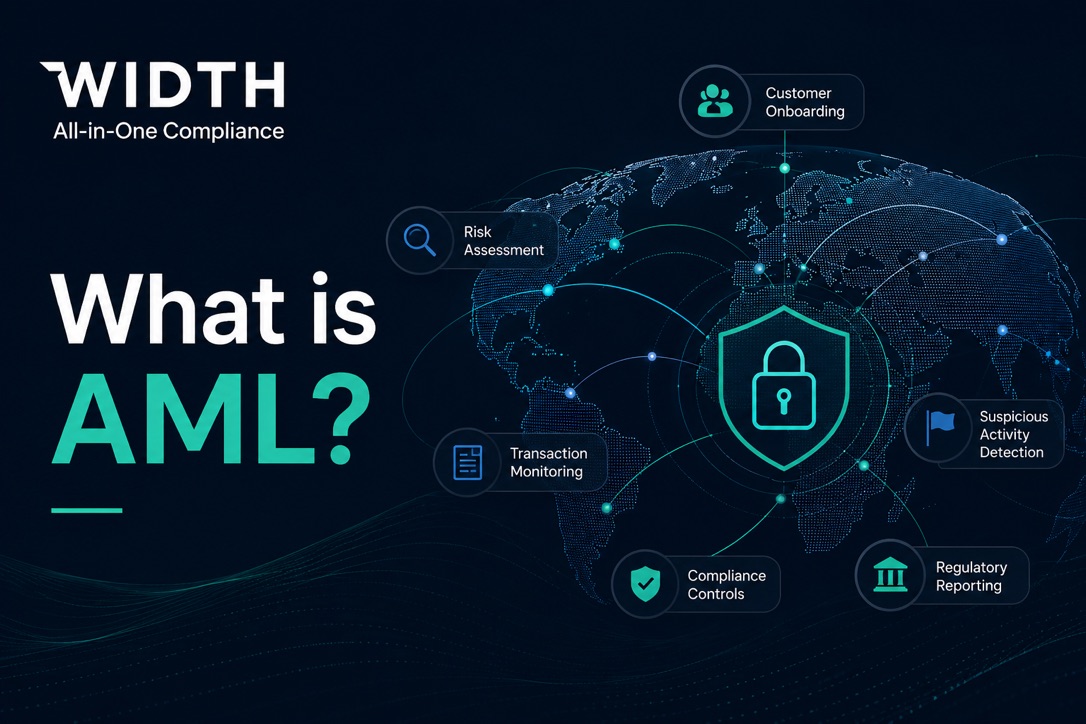
What is AML?
Anti-Money Laundering (AML) refers to the policies, regulations, technologies, and procedures businesses use to detect and prevent illegal financial activities. AML frameworks are designed to stop criminals from disguising illegally obtained money as legitimate income through financial systems.
Today, AML compliance has become a critical requirement for banks, fintech companies, cryptocurrency platforms, payment providers, insurance firms, and other regulated businesses worldwide. Governments continue strengthening AML regulations because financial crimes are becoming more advanced and increasingly global.
Without proper AML controls, businesses face serious risks. These include financial penalties, reputational damage, operational disruptions, and regulatory investigations. As a result, organisations must build strong compliance systems that can identify suspicious activities early and respond effectively.
Modern businesses also require scalable operational workflows to manage compliance efficiently. This is where platforms like WIDTH help organisations streamline AML-related processes, improve visibility across teams, and reduce manual compliance bottlenecks.
What AML means
AML focuses on preventing criminals from using financial systems for illegal purposes. Businesses must monitor customer behaviour, verify identities, and report suspicious transactions according to regulatory requirements. The main objective of AML is to reduce financial crime risks while protecting the integrity of the global financial system.
Detect suspicious financial activities
One of the most important functions of AML is detecting suspicious financial activities before they escalate into larger criminal operations. Suspicious activities may include:
- Unusually large cash deposits
- Rapid movement of funds between accounts
- Transactions involving high-risk countries
- Inconsistent customer behaviour
- Multiple transactions structured to avoid reporting thresholds
- Unexplained source of funds
Financial institutions use transaction monitoring systems and risk assessment tools to identify these behaviours. However, operational efficiency also matters. Compliance teams often manage large volumes of customer reviews, alerts, and documentation daily. WIDTH helps businesses organise internal compliance workflows more efficiently by centralising operational tasks, improving collaboration between departments, and streamlining review processes.
Prevent financial crimes
AML regulations are designed to reduce crimes such as fraud, tax evasion, corruption, bribery, drug trafficking, cybercrime, human trafficking, and organised crime financing. Criminal organisations rely heavily on laundering money to hide illegal profits. Strong AML controls make it significantly harder for these groups to move funds undetected. Businesses that implement effective AML programmes reduce both operational risks and legal exposure.
Protecting the integrity of the financial system
Trust is essential within the financial industry. Customers expect financial institutions to operate securely and transparently. AML compliance helps maintain confidence in banks, payment platforms, fintech providers, investment firms, and digital asset exchanges. Weak AML controls can damage public trust quickly. In many cases, regulatory violations lead to massive fines, legal consequences, and reputational harm.
Reducing risks related to terrorism financing
AML regulations also focus heavily on Counter-Terrorism Financing (CTF). Terrorist organisations may attempt to move funds through legitimate financial channels to support illegal activities. These transactions are often hidden using complex financial structures or cross-border transfers. AML controls help businesses:
- Identify unusual payment behaviour
- Monitor high-risk entities
- Detect hidden transaction patterns
- Report suspicious activities to authorities
Financial institutions that fail to implement proper AML controls may unintentionally facilitate criminal or terrorist financing activities.
How money laundering works
Money laundering is the process of making illegally obtained money appear legitimate. Criminals attempt to hide the original source of funds by moving money through multiple transactions or financial channels. Money laundering usually occurs in three stages.
Placement
Placement is the first stage where illegal funds enter the financial system. Criminals may:
- Deposit cash into bank accounts
- Purchase high-value assets
- Use shell companies
- Mix illegal money with legitimate business revenue
This stage is often the riskiest for criminals because large cash movements can attract regulatory attention.
Layering
Layering involves moving money repeatedly to hide its origin. Criminals commonly:
- Transfer funds between multiple accounts
- Move money across different countries
- Convert assets into cryptocurrencies
- Use fake invoices or shell companies
The purpose is to make the money trail difficult to trace. This stage creates operational challenges for compliance teams because suspicious activities may involve multiple systems, jurisdictions, and customer profiles. Businesses therefore require efficient internal coordination and monitoring processes. WIDTH helps teams streamline workflow management across operational reviews, improving visibility and reducing fragmented processes.
Integration
Integration is the final stage where laundered money re-enters the legitimate economy. Criminals may invest in businesses, purchase property, buy luxury assets, or invest in financial products. At this stage, illegal money appears legitimate and becomes much harder to trace. This is why AML monitoring, KYC verification, and transaction analysis remain critical throughout the customer lifecycle.
AML regulations in different countries
AML regulations vary by jurisdiction, although many countries follow recommendations established by the Financial Action Task Force (FATF). Global regulators continue strengthening AML requirements as financial crimes become more sophisticated.
AML regulation in Singapore
Singapore has one of the strongest AML frameworks in Asia. The Monetary Authority of Singapore (MAS) oversees AML compliance requirements for financial institutions. Singapore requires businesses to:
- Conduct customer due diligence
- Verify customer identities
- Monitor transactions continuously
- Maintain compliance records
- Report suspicious activities promptly
Singapore also places strong emphasis on risk-based AML frameworks. Businesses must assess customer risks carefully and apply enhanced due diligence where necessary. Financial institutions operating in Singapore often manage complex onboarding and compliance workflows. WIDTH helps organisations centralise internal compliance operations, improving workflow visibility and operational efficiency.
AML regulation in Hong Kong
Hong Kong maintains strict AML regulations regulated primarily by the Hong Kong Monetary Authority (HKMA). Businesses must implement:
- Customer identity verification
- Ongoing transaction monitoring
- Risk-based AML assessments
- Suspicious transaction reporting
- Internal compliance controls
Hong Kong also focuses heavily on cross-border financial transparency due to its role as an international financial hub. Companies operating across multiple regions often face operational complexity when managing AML reviews and documentation. WIDTH helps simplify these processes by improving coordination between teams and operational workflows.
AML regulation in the UAE
The UAE has strengthened its AML regulations significantly in recent years. Authorities introduced stricter requirements to align with international standards and improve transparency across financial sectors. Businesses in the UAE must:
- Conduct enhanced due diligence
- Monitor high-risk transactions
- Maintain accurate records
- Report suspicious activities
- Implement internal AML programmes
The UAE continues investing heavily in compliance infrastructure to strengthen investor confidence and reduce financial crime risks.
KYC and customer due diligence requirements
Know Your Customer (KYC) and Customer Due Diligence (CDD) are core components of AML compliance. KYC helps businesses verify customer identities before establishing financial relationships. Businesses usually collect:
- Government-issued identification
- Proof of address
- Company registration documents
- Source of wealth information
- Beneficial ownership details
CDD extends beyond identity verification. It also involves assessing customer risk levels and monitoring ongoing activities. High-risk customers may require Enhanced Due Diligence (EDD), particularly if they:
- Operate in high-risk industries
- Conduct large transactions
- Use offshore structures
- Are politically exposed persons (PEPs)
- Operate in sanctioned jurisdictions
Managing customer onboarding, document collection, verification tracking, and review approvals can become operationally intensive. WIDTH helps businesses streamline these operational workflows through centralised process management and better team collaboration.
AML compliance best practices
Strong AML programmes require more than basic regulatory compliance. Businesses must continuously improve monitoring processes, operational efficiency, and internal controls. For a deeper operating-model view, see our companion piece on building an efficient AML compliance workflow.
Verify customer activities
Businesses should verify whether customer behaviour matches their expected profile. Examples include transaction frequency, payment sizes, geographic activity, business operations, and source of funds. Unexpected changes may indicate suspicious activity requiring further investigation. Efficient operational workflows help compliance teams respond faster and reduce review delays.
Monitor transactions
Transaction monitoring is one of the most critical AML processes. Businesses should monitor large fund transfers, structuring activities, rapid account movements, cross-border transactions, and high-risk jurisdictions. Real-time monitoring systems help identify risks earlier and improve compliance responsiveness. Operationally, businesses also need efficient coordination between compliance, operations, and risk teams. WIDTH helps improve visibility across these workflows, reducing bottlenecks and improving internal process management.
Assess customer risk levels
AML regulations increasingly follow a risk-based approach. Businesses should classify customers according to industry sector, geographic location, transaction behaviour, ownership structure, and regulatory exposure. Higher-risk customers require closer monitoring and enhanced due diligence. Risk assessment frameworks should also evolve continuously as customer behaviour changes over time.
Report suspicious activities
Financial institutions must report suspicious transactions to relevant authorities. Suspicious Activity Reports (SARs) play a critical role in supporting investigations, preventing financial crimes, and strengthening regulatory oversight. Failing to report suspicious activities may result in regulatory penalties, licence restrictions, legal consequences, and reputational damage. Clear internal workflows are essential for handling escalations efficiently and ensuring reporting deadlines are met. Our piece on why manual AML processes create compliance risks covers what typically breaks at this stage.
Maintain proper records
Most AML regulations require businesses to maintain records for several years. This includes customer identification documents, transaction histories, risk assessments, compliance reviews, and internal investigation records. Well-organised recordkeeping improves audit readiness and supports regulatory inspections. WIDTH helps businesses centralise operational workflows and improve documentation management processes — see also case management, which keeps every investigation on a single record.
How WIDTH helps with AML processes
Modern AML compliance involves significant operational complexity. Compliance teams often manage large volumes of onboarding reviews, transaction investigations, approval processes, and documentation requirements. WIDTH helps businesses simplify these operational workflows through structured collaboration and workflow management tools. With WIDTH, businesses can:
- Centralise compliance operations
- Improve onboarding coordination
- Streamline document collection workflows
- Organise internal approval processes
- Improve cross-team visibility
- Reduce manual operational bottlenecks
- Enhance workflow accountability
- Support scalable compliance operations
As AML regulations continue evolving globally, businesses require systems that improve operational efficiency without sacrificing compliance standards. For a fuller view of how automation reshapes the operating model, see how AML workflow automation improves compliance efficiency.
Frequently asked questions about AML
What does AML stand for?
AML stands for Anti-Money Laundering. It refers to regulations, policies, and procedures designed to prevent illegal financial activities and money laundering.
Why is AML important?
AML helps protect financial systems from criminal abuse. It reduces risks related to fraud, corruption, terrorism financing, and organised crime while improving trust within financial institutions.
What is the difference between AML and KYC?
AML refers to the broader framework for preventing financial crimes. KYC is one part of AML that focuses specifically on verifying customer identities and assessing customer risks.
Which businesses need AML compliance?
Businesses commonly requiring AML compliance include banks, fintech companies, payment providers, cryptocurrency exchanges, insurance companies, investment firms, and money service businesses. Certain non-financial businesses may also require AML compliance depending on local regulations.
What happens if a company fails AML compliance?
Non-compliance may result in heavy financial penalties, regulatory investigations, business restrictions, reputational damage, and — in severe cases — criminal liability.
How does transaction monitoring support AML?
Transaction monitoring helps businesses identify suspicious activities such as unusual fund movements, high-risk transactions, or potential money laundering behaviour.
What is Enhanced Due Diligence (EDD)?
Enhanced Due Diligence is a stricter review process applied to higher-risk customers. It involves deeper verification, increased monitoring, and additional source-of-funds checks.
How can businesses improve AML operational efficiency?
Businesses can improve AML efficiency by automating workflows, centralising compliance operations, improving internal collaboration, streamlining onboarding processes, and using structured workflow management platforms like WIDTH.