29 September 2026
Bitget Hack: Where Did the Stolen Funds Go?
Follow the stolen fund trail across XRP, Ethereum and other chains, and see how receiving platforms can review deposit exposure.
Read article →Weekly analysis on AML, KYT, KYA and the changing RegTech landscape.
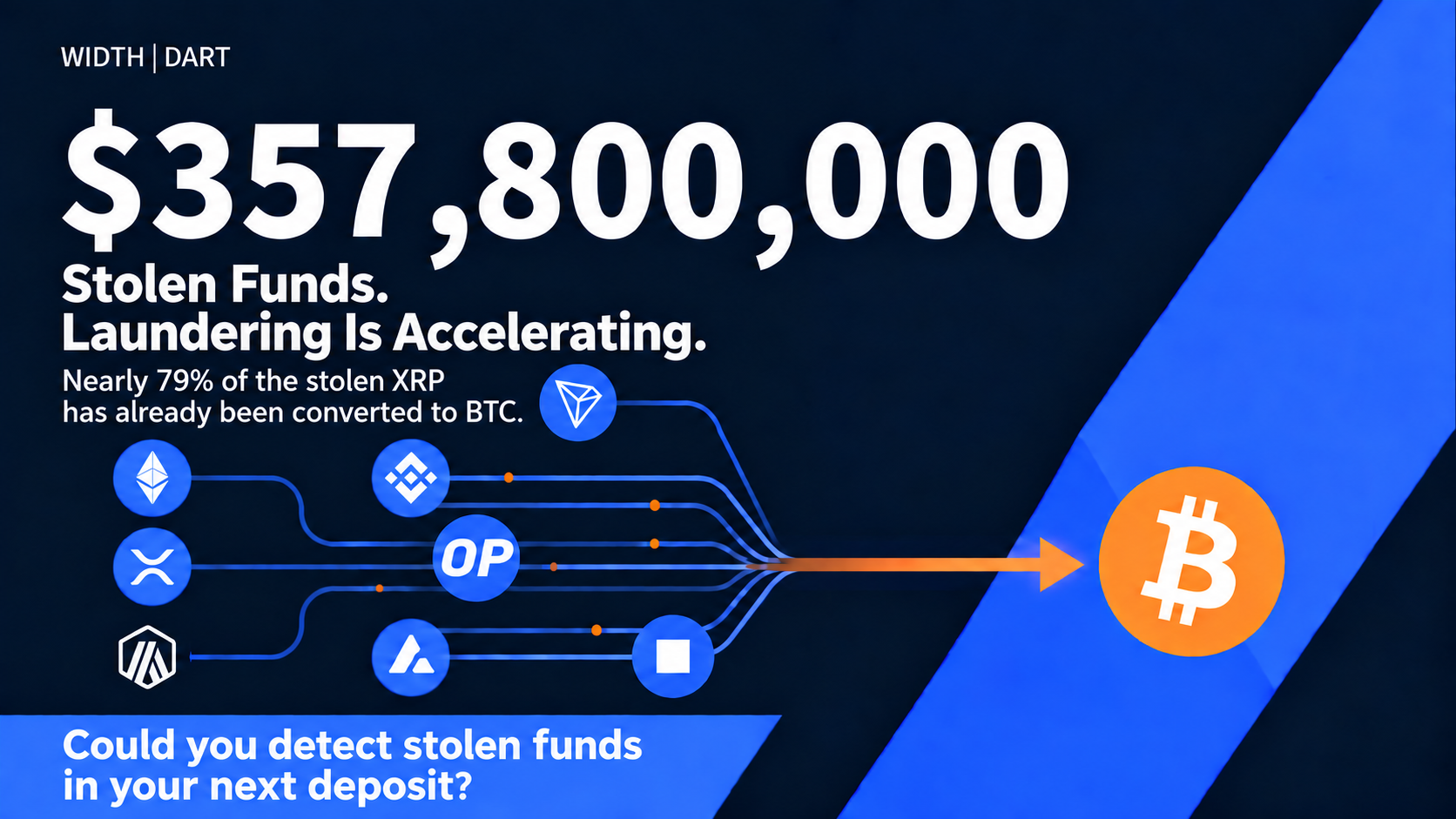
Follow the stolen fund trail across XRP, Ethereum and other chains, and see how receiving platforms can review deposit exposure.
Read article →A practical guide to due diligence, beneficial ownership, screening, identity verification, records and ongoing monitoring.
Read article →Learn what ISO/IEC 27701 covers, why WIDTH is pursuing certification and how stronger privacy governance benefits clients and compliance teams.
Read article →Learn how banks can connect risk-based KYC, fraud controls, approvals and ongoing monitoring in a faster, safer digital onboarding journey.
Read article →Evaluate KYC, KYB, AML monitoring, investigations, integration, AI governance and audit readiness under real operating conditions.
Read article →See how connected KYC, monitoring, investigations and decision records can reduce hidden work and give bank analysts stronger context.
Read article →Learn how to find, verify and assess negative news without treating every article, allegation or name match as fact.
Read article →Understand who PEP screening covers, what a possible match means and how teams assess risk and record defensible decisions.
Read article →Learn how sanctions screening works, why potential matches need investigation, and how teams build an effective, audit-ready screening workflow.
Read article →A practical guide to connecting KYC, KYB, monitoring, investigations, evidence and accountable decisions across the customer lifecycle.
Read article →Understand how transaction monitoring works, what it detects, and how compliance teams investigate alerts and document defensible decisions.
Read article →Learn how to evaluate monitoring, alert triage, risk scoring, case management and audit capabilities for fast-moving payment operations.
Read article →Learn how an AI reviewer prepares evidence and accelerates case review while keeping judgement, approval and accountability with people.
Read article →Learn how compliance case management connects alerts, evidence, decisions and approvals in an efficient, audit-ready investigation workflow.
Read article →Learn how to connect identity verification, screening, customer risk decisions and ongoing monitoring in a risk-based, audit-ready onboarding process.
Read article →