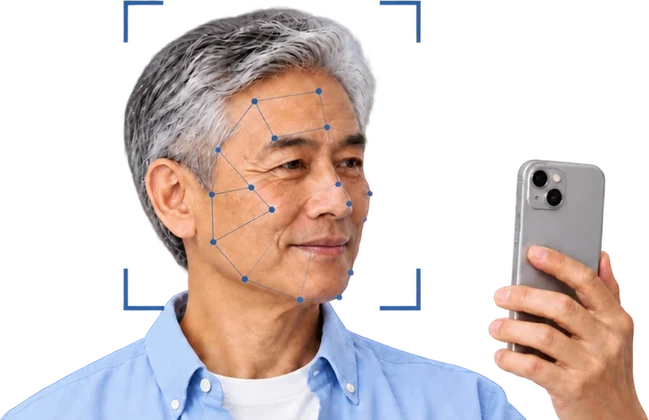
Verify Real Customers in Under 30 Seconds

Fake sign-ups, borrowed IDs and stitched-together vendor checks slow down good customers and let bad ones through. WIDTH runs ID verification, face match, liveness, device checks and screening in one flow, and keeps every result on the customer's record.

KYC verification in under 30 seconds

Built for banks, fintechs, payment firms and digital asset businesses that onboard individuals at scale

Times measured from document and selfie upload to decision. Coverage and accuracy depend on document type, device and configuration.

Full KYC at US$0.50 per checkFor digital asset businesses, with wallet address screening included. Offer ends 31 Dec 2026. T&Cs apply.
See Pricing →

What is KYC Verification?

KYC verification confirms that a customer is a real person and who they claim to be, using an identity document, a face match and sanctions and PEP screening. WIDTH KYC Onboarding runs ID verification, 1:1 face match, passive liveness, and device and IP analysis in one flow. A full check returns a decision in under 30 seconds.

Full KYC
under 30 seconds, from document and selfie upload to decision
Core checks
4 (ID verification, 1:1 face match, passive liveness, device and IP analysis)
ID document types
16,000+
Face-match accuracy
98.2%
Offer
US$0.50 per full KYC check for digital asset businesses, until 31 Dec 2026 (T&Cs apply)
Integration
Web, iOS, Android and Flutter SDKs, the REST API, or the WIDTH dashboard

Onboarding is Where Fraud and Friction Start

Every extra step loses genuine applicants. Every gap lets in a stolen ID, a deepfake selfie or one person opening ten accounts. Most teams fix this by adding vendors, then spend their time reconciling results that don't agree.

WIDTH puts the checks in one flow and the results on one record, so your team approves good customers quickly and sees exactly why anyone was stopped.

Impersonation and Fake Sign-Ups

Stolen documents, printed photos and replayed selfies pass a document-only check.

One Person, Many Accounts

Without device and IP signals, a repeat applicant looks like a new customer every time.

Evidence Spread Across Tools

The ID result, the screening hit and the approval live in different systems, so audits mean rebuilding the file.

Who It's For

  • Banks and digital banks
  • Fintechs and neobanks
  • Payment and stored-value firms
  • Exchanges, brokers, custodians and tokenised-asset platforms

Problems It Solves

  • Impersonation
  • Fake and duplicate sign-ups
  • Slow manual ID review
  • Screening done in a separate tool
  • Audit files rebuilt by hand

Where It Fits

Onboard and Screen. Results carry into AML Monitoring, Fraud Detection and Case Management on the same customer record.

How It Fits Your Stack

  • Web, iOS, Android and Flutter SDKs
  • REST API and webhooks
  • Or use the WIDTH dashboard with no build

What You Get

Four Checks,
One Flow

Problem
Each extra vendor adds a step, a contract and a mismatch.
What WIDTH does
ID verification, 1:1 face match, passive liveness, and device and IP analysis run in a single capture.
Result
A full KYC decision in under 30 seconds, with no extra steps for genuine users.

Screening on the Same Record

Problem
Sanctions and PEP checks run somewhere else and come back as unexplained hits.
What WIDTH does
Screens the verified identity against sanctions, PEP and adverse media in the same flow and shows the analyst why each match fired.
Result
Fewer handovers and a clearer review.

Re-KYC When Risk Changes, Not When the Calendar Says

Problem
Fixed one-, three- and five-year refresh cycles miss real changes and annoy low-risk customers.
What WIDTH does
Triggers re-verification on events you set, such as a sanctions list update, a change of address or unusual activity, and re-collects only what changed.
Result
Fresher records and less drop-off.

See the Whole Check in One Result

The document, the face, the device and the screening outcome sit together, with the recommended action and the reason behind it.

  • Every Check, One ScreenSee which check passed, which flagged and why.
  • Device and IP SignalsSpot repeat applicants and restricted regions.
  • Your Decision on RecordApprove, request more or decline, with the evidence kept.

How It Works

  1. CaptureThe applicant photographs their ID and takes a selfie in your app or web journey. The SDK checks image quality before submitting.
  2. VerifyWIDTH reads the document (visual zone, MRZ, barcode, and the chip where supported), checks it is genuine, matches the face to the portrait and confirms a live person.
  3. Check the DeviceDevice and IP analysis flags multi-accounting, emulators and restricted regions.
  4. ScreenThe verified identity is screened against sanctions, PEP and adverse media.
  5. DecideYour risk rules return approve, review or decline. Exceptions go to a reviewer with the evidence attached.

Decisions Stay with Your Team

You set the risk rules, the thresholds and what needs a person. WIDTH runs the checks and recommends an outcome. Your team approves exceptions, and the decision is recorded against the reviewer who made it.

Every Check is Auditable

Verification results, screening outcomes, approvals and the rules in force are kept with the customer record, ready for regulatory review and internal audit.

Captured

  • Document images and extracted data
  • Face match and liveness results
  • Device and IP signals
  • Screening hits and how they were resolved
  • Rule and policy version
  • Reviewer, decision and timestamp
Supports your obligations under
FATF Recommendation 10 and local customer due diligence rules, configurable for MAS Notice 626, the HKMA AML/CFT Guideline and similar regimes.
Sources
FATF Recommendations (fatf-gafi.org) · MAS Notice 626 on Prevention of Money Laundering and Countering the Financing of Terrorism (Banks) · HKMA Guideline on Anti-Money Laundering and Counter-Financing of Terrorism

Trusted by Regulated Institutions Since 2014

500+regulated institutions*
180+jurisdictions*
ISO/IEC 27001certified
ISO/IEC 27701certified

*Cumulative since 2014.

Before You Get Started

What is KYC verification?

KYC (know your customer) verification is the check a regulated business runs to confirm that a new customer is a real person and who they say they are, before opening an account. It usually combines an identity document, a face match, a liveness check and sanctions and PEP screening. WIDTH KYC Onboarding runs these in one flow and returns a full decision in under 30 seconds.

What is eKYC?

eKYC (electronic know your customer) is KYC done remotely: the customer photographs an identity document and takes a selfie on a phone or computer, and software checks the document, the face and the person's presence instead of a branch visit. WIDTH KYC Onboarding is an eKYC flow that runs in your app or website through Web, iOS, Android and Flutter SDKs or the REST API.

What is liveness detection?

Liveness detection checks that a selfie comes from a real person in front of the camera, not a printed photo or a replayed image. Passive liveness does this from the captured image, without asking the user to blink or turn their head. WIDTH runs passive liveness in every full KYC check, alongside ID verification, 1:1 face match, and device and IP analysis.

What is a 1:1 face match?

A 1:1 face match compares the face in a customer's selfie with the portrait on their identity document to confirm they are the same person. WIDTH runs a 1:1 face match in every full KYC check, with 98.2% face-match accuracy. Accuracy depends on document type, device and configuration, and unclear results can be routed to a reviewer.

What checks are included in WIDTH KYC verification?

A full WIDTH KYC check includes four core checks: ID verification, 1:1 face match, passive liveness, and device and IP analysis. The verified identity is then screened against sanctions, PEP and adverse media lists in the same flow, and your risk rules return approve, review or decline.

How long does a KYC check take?

A full WIDTH KYC check typically returns a decision in under 30 seconds, measured from document and selfie upload. Applicants routed to manual review wait for your team's decision, with the evidence already attached for the reviewer. Coverage depends on document type, jurisdiction, device and configuration.

Can we embed KYC verification in our own app?

Yes. Use the WIDTH Web, iOS, Android or Flutter SDK, or call the REST API. The SDK checks image quality before submitting, results come back to your backend, and the full record is in the WIDTH dashboard. Teams that prefer no build can use the dashboard alone.

How much does KYC verification cost?

WIDTH KYC pricing depends on volume and the checks you use. For digital asset businesses, a full KYC check costs US$0.50 per check until 31 Dec 2026, with wallet address and transaction screening included; terms and conditions apply. For other businesses, or for volume pricing, contact the WIDTH sales team.

Who is KYC Onboarding built for?

WIDTH KYC Onboarding is built for regulated businesses that onboard individuals: banks, fintechs, payment and stored-value firms, and digital asset businesses such as exchanges, brokers and custodians. They can embed it in their own app through SDKs or the REST API, or use the WIDTH dashboard with no build.

Does WIDTH decide who we onboard?

No, WIDTH does not decide who you onboard. WIDTH runs the checks and recommends an outcome based on the rules you configure. Your team decides on exceptions and owns the final decision, which is recorded against the reviewer who made it.

See How It Fits Your Onboarding Journey

Run a live check with the WIDTH team, from selfie to decision to audit export.

AI on the work. People on the decision. Evidence on the record.